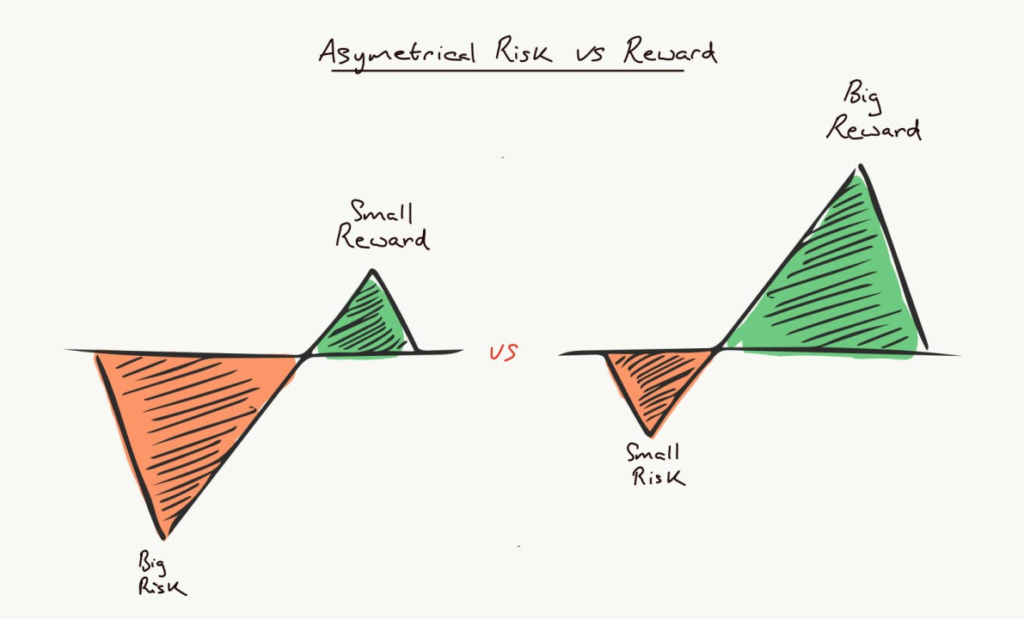
Most people are slowly killing themselves under the illusion of self-preservation.
You think you are playing it safe. You think by staying inside the lines, avoiding uncalculated exposure, and consuming endlessly from the sidelines, you are mitigating risk.
You aren’t. You are just paying a hidden, compounding tax on cowardice.
Here is the truth nobody tells you: comfort does not eliminate suffering; it merely guarantees that your suffering yields zero return.
In 1968, psychologist Julian Rotter introduced the concept of the locus of control. Most people operate under an extreme external locus. They believe their lives are governed by external circumstances, market shifts, societal expectations, and luck. Because they believe the world is volatile, they build an internal defense system designed around one core directive: minimize downside at all costs.
They optimize for security. They choose the well-trodden career path. They hoard ideas instead of building them. They listen to podcasts for three hours a day, convinced they are “preparing,” when in reality they are taking mental pain medication to numb the awareness of their own stagnation.
They do not realize that in a dynamic, complex system, pure defensive posture is a guaranteed path to decay. Entropy wins when a system stops taking input, taking risks, and expanding.
If you are going to experience friction, anxiety, self-doubt, and effort in this life anyway—and you will, regardless of what path you choose—it is absolute madness to select a path where the maximum possible return on that suffering is zero.
You need to stop playing a symmetric game with an asymmetric world.
The Trap of Symmetrical Living
In 2020, I bought my very first share of Tesla stock.
I had no clue what I was doing. I had no mentor, no structured framework, and zero exposure to the markets. I was driven by a vague desire to escape the default trajectory, but my psychology was entirely unconditioned.
The morning after I bought that single share, I logged into my account. The stock had dipped. I was down $5.
A wave of biological panic washed over my chest. My heart rate spiked. My internal narrative instantly spiraled into catastrophic framing. I could not tolerate the psychic discomfort of watching my hard-earned money fluctuate into the red.
Without thinking, I hit the sell button. I locked in the $5 loss and paid another $5 in platform fees on the exit.
Sitting there staring at a $10 net loss, I rationalized my cowardice. I told myself: “This isn’t for me. It’s too volatile. I’m just going to stick to the safe path from now on.”
Let’s dissect what actually happened in that moment, because it is a micro-version of how 99% of people run their entire lives.
My conscious mind told me I was making a rational financial decision. My unconscious mind—which is run by a survival algorithm honed over hundreds of thousands of years of evolutionary pressure—was protecting my ego. It treated a temporary $10 paper loss as a threat to my survival. It sought immediate homeostatic relief.
The “safe path” I ran back to wasn’t safe at all. It was a slow-bleed trap.
If I had stayed in that mindset—if I had allowed a temporary $10 discomfort to dictate my relationship with risk—my entire life would be unrecognizable today. I would not have built the financial freedom I have now. I would not have developed the cognitive tolerance required to execute high-stakes decisions. I would still be a passive participant in someone else’s system.
Most people execute that exact same transaction every single day, not with $10 in a brokerage account, but with their time, their attention, and their potential.
They take a tiny hit of rejection, a brief moment of embarrassment, or a minor setback in a project, and their internal self-preservation algorithm screams. They liquidate their ambitions, lock in their losses, and retreat to the high-friction, low-reward prison of the comfortable default.
I. The Cybernetics of Human Fear
To understand why you default to small, safe behaviors, you have to understand cybernetics: the study of control and communication in complex systems.
Your mind is a goal-oriented cybernetic machine. It operates on a continuous loop: Sensor → Comparator → Actuator.
- Your Sensor perceives the external environment.
- Your Comparator compares that perception against your internal identity (your goal or self-image).
- Your Actuator adjusts your behavior to close the gap between reality and your identity.
Here’s the problem: your baseline identity was not engineered by you. It was programmed by evolutionary biology, cultural conditioning, parental anxieties, and institutional schooling.
That default programming prioritizes one thing above all else: survival through risk minimization.
[ Default Identity: Avoid Danger ]
│
▼
[ Sensor perceives volatility ] ──► [ Comparator flags error ] ──► [ Actuator triggers panic/retreat ]
When you attempt to do something hard—launch a business, execute an unorthodox strategy, publicize your ideas, or step into a new domain—your Comparator flags this unstudied volatility as an existential error. It fires off anxiety, self-doubt, and procrastination.
These negative emotions are not proof that you are doing the wrong thing. They are simply the system’s error signals attempting to pull you back to your baseline identity.
When I lost $10 on that Tesla trade, my system worked perfectly according to its default programming. It detected an error (financial loss) and corrected it by forcing a retreat (selling the stock and quitting).
The vast majority of human beings live their entire lives at the mercy of this default feedback loop. They mistake the error signal of discomfort for a signal of danger.
They want the rewards of an extraordinary life, but their internal comparator is still set to “avoid social rejection and temporary loss.” Because the system cannot operate outside its set parameters, they remain stuck in a loop of low-exposure, low-return behavior.
You say you want freedom, wealth, and mastery. But your subconscious actions reveal your true goal: the absolute avoidance of short-term discomfort.
II. The Asymmetric Framework: Mapping Upside and Downside
Nassim Taleb popularized the concept of asymmetry in financial fragile systems, but it applies even more deeply to human agency.
A Symmetric Bet is one where the potential upside and downside are equal and bound. Most traditional employment is symmetric or inverse-asymmetric: your upside is capped by a salary, while your downside includes losing your primary source of income and burning out your health.
An Asymmetric Bet is one where the downside is strictly capped, known, and finite, while the upside is unbounded, open-ended, and infinite.
SYMMETRIC RISK: [ Capped Downside ] <=========> [ Capped Upside ]
ASYMMETRIC RISK: [ Capped Downside ] <=======================================> [ Unlimited Upside ]
Let’s apply this to personal action.
When you decide to write online, build a product, learn a complex skill, or overhaul your lifestyle, what is your absolute, maximum downside?
- Temporary embarrassment.
- A small loss of capital.
- Discomfort and cognitive fatigue.
- The bruised ego of realizing you aren’t as good as you thought you were.
Notice something critical about that list: every single downside is finite, temporary, and non-fatal. Your downside is capped at brief psychological discomfort.
Now, what is the upside if you succeed?
- Total financial independence.
- Sovereign control over your time and location.
- Uncapped compounding leverage on your intellectual property.
- Complete reconstruction of your identity and self-worth.
The upside is infinite. It completely alters the trajectory of your lineage.
Yet, because your evolutionary brain cannot distinguish between a threat to your social status and a physical threat to your life, you treat a capped-downside, infinite-upside bet as if it were a drop off a cliff.
You choose the symmetric trap: guaranteed mediocrity to protect against bounded discomfort.
III. The Four Pillars of the Asymmetric Life
To break free from the default cybernetic loop and exploit the asymmetric nature of reality, you must adopt four structural pillars. These are not feel-good motivational mantras. They are operational principles for navigating uncertainty.
┌─────────────────────────────────────────────────────────┐
│ THE ASYMMETRIC LIFE SYSTEM │
├────────────────────────────┬────────────────────────────┤
│ I. DO HARD THINGS │ II. DO YOUR THING │
│ Embrace the initial dip │ Fire the internal voice │
├────────────────────────────┼────────────────────────────┤
│ III. DO IT FOR DECADES │ IV. WRITE THE STORY │
│ Exploit long compounding │ Pre-script future state │
└────────────────────────────┴────────────────────────────┘
1. Do Hard Things (Embrace the Dip)
Nothing of high value exists in a zero-friction environment.
When you initiate a structural change in your life, you enter what author Seth Godin calls “The Dip.” Performance drops. Uncertainty spikes. The novelty wears off, and you are left doing difficult work with no immediate feedback.
This initial dip is where 95% of people abandon the field. They assume the presence of friction means they made a mistake.
The asymmetric thinker views friction differently. Friction is the moat.
If what you are doing were easy, comfortable, and immediately rewarding, millions of other people would do it, driving the value of the output to zero. The difficulty is the value creation mechanism.
When I ate that $10 loss in 2020, I was experiencing the entry fee to the financial markets. The moment I realized that fee was required—that every single person who achieves mastery pays that exact fee in various currencies—the friction ceased to be a deterrent. It became proof of progress.
2. Do Your Own Thing (Fire the “Fear Guy”)
Inside your psyche sits an automated sub-personality. Let’s call him the Fear Guy.
The Fear Guy operates entirely on historical data. He looks at your past, your upbringing, your failures, and the norms of your culture, and he constructs a safe perimeter.
Whenever you attempt to step outside that perimeter, the Fear Guy steps up to the mic. He doesn’t say, “I am trying to keep you weak.” He uses rationalization. He says:
- “Now isn’t the right time; wait until you have more savings.”
- “Who are you to publish your thoughts? You’re not an expert.”
- “Let’s just play it safe for another six months.”
He presents himself as your protector. In reality, he is the warden of a prison you built yourself.
You cannot negotiate with the Fear Guy. You cannot reason him away. You can only do one thing: action-bind him. You must execute the target behavior while the fear is present.
Confidence is not the absence of fear; it is the physiological habituation to doing difficult tasks in its presence.
3. Do It for Decades
Short-term horizons breed reactive fragility.
When you operate on a 30-day horizon, a bad week, a market drawdown, or an unanswered email feels like a crisis. You constantly alter your strategy, swap tools, switch niches, and abandon platforms. You interrupt the process of compounding before it ever begins.
Compounding is the fundamental law of asymmetric returns. It applies to capital, knowledge, relationships, and skill development.
Short-Term Horizon (Reactive) ──► Constant Strategy Switches ──► Zero Compounding
Long-Term Horizon (Decisive) ──► Persistent Execution ──► Exponential Growth
When you extend your operational horizon to 10 or 20 years, your entire psychological relationship with failure shifts. A bad month is no longer an existential threat; it is an insignificant data point in a multi-decade trajectory.
When you commit to doing your thing for decades, you step out of competition entirely. Most people cannot maintain focus on a single domain for 18 months. If you stay on the field for 10 years, you win simply through the attrition of everyone else.
4. Write Your Story Before It Happens
Most people use their internal narrative as a historical record. They look back at what happened to them and construct a identity out of past wounds, past failures, and past limitations.
They are letting the past write the future.
The asymmetric life requires you to invert this process: you write the narrative first, then force reality to conform to it.
This is not mystical manifestation nonsense. It is cognitive psychology.
Your brain possesses a network of neurons called the Reticular Activating System (RAS). The RAS acts as a filter between your subconscious mind and the vast stream of sensory data coming from the world. It screens out everything that does not match your current operational goal.
If your identity is set to “I am a person who plays it safe and avoids loss,” your RAS will highlight every danger, every reason to quit, and every comfortable escape hatch.
When you explicitly state your target identity and pre-write your story in vivid detail, you recalibrate your RAS. You begin to notice asymmetric opportunities, leverage points, and strategic alliances that were previously invisible to you.
IV. The Protocol: Building Your Asymmetric Engine
You do not need more theory. You need a structured, high-friction protocol to reprogram your cybernetic feedback loop and force yourself into asymmetric execution.
This is a 14-Day Audit and Recalibration Protocol. It requires actual work. Do not skim this section; execute it.
┌────────────────────────────────────────────────────────┐
│ 14-DAY RECALIBRATION PROTOCOL │
├────────────────────────────────────────────────────────┤
│ PHASE 1: Downside Inventory (Audit your hidden costs) │
│ PHASE 2: Define Your Asymmetric Bet (Scope the play) │
│ PHASE 3: The Pre-Scripting Exercise (Recalibrate RAS) │
│ PHASE 4: Forced Exposure (Execute the cold action) │
└────────────────────────────────────────────────────────┘
Phase 1: Downside Inventory (30 Minutes)
Take out a physical notebook. Answer the following questions with zero bullshit:
- What specific action have I been avoiding under the guise of “waiting for the right time” or “needing more information”?
- If I take this action and fail completely, what is the absolute worst realistic outcome? (List the actual financial, social, and physical costs—not the vague feelings of embarrassment).
- What is the cost of NOT taking this action over the next 5 years? (Calculate lost income, lost agency, physical decay, and compounded regret).
Compare the answer from Question 2 with Question 3. You will realize that the cost of inaction is exponentially higher than the cost of failed action.
Phase 2: Define Your Asymmetric Bet
Select one high-leverage project or goal that you have kept pending:
- Launching a dedicated publication or content ecosystem.
- Building a bare-bones version of a product and putting a buy button on it.
- Deploying capital into an asset class you’ve been studying but were too terrified to execute on.
- Cold-outreaching to 20 high-value mentors or partners.
Write down the exact parameters of this bet:
- The Action: [Define the precise output]
- The Capped Downside: [Define the max loss: e.g., $100, 10 hours, mild social awkwardness]
- The Unbounded Upside: [Define the potential 5-year transformation]
Phase 3: The Pre-Scripting Exercise
Every morning for the next 14 days, write a 1-page entry in the present tense detailing your operational reality 3 years from today.
Do not write about outcomes (“I have $1M”). Write about identity and behavior:
“I am a person who acts under uncertainty. I wake up, review my core leverage points, and execute before my fear-response can organize a defense. I do not liquidate my positions or my goals at the first sight of friction…”
This daily pre-scripting acts as an explicit update to your cybernetic Comparator.
Phase 4: Forced Exposure
Before the 14 days are over, you must execute one cold action—an action that triggers immediate, acute psychic friction, but carries zero actual physical or financial danger.
- Publish an unedited piece of writing that exposes your real perspective.
- Offer a paid service directly to a prospect without a polished website.
- Make the trade, buy the asset, or commit the capital you’ve been agonizing over.
Feel the error signal fire off in your nervous system. Watch your heart rate rise. Sit with it. Do not run to an escape hatch.
By staying in the pocket during the spike of discomfort, you break the unconscious loop that has kept you small for years.
V. The Integration: Turning Your Life Into a High-Leverage System
When you synthesize these principles, your baseline operational state shifts completely.
You no longer view life as a series of random, high-risk events that you must passively defend against. You view life as a continuous series of low-cost experiments designed to harvest asymmetric tailwinds.
Think of your life as a video game where the mechanics are heavily weighted in your favor, but only if you leave the starting village.
In the starting village (the default societal path), the rules are strict, the rewards are capped, and the routine is predictable. It feels safe, but there is no path to mastery.
Outside the village, there are monsters, wild weather, and unknown terrain. If you get hit, you lose health points (temporary setbacks, lost money, bruised ego). But you do not die. You respawn at the nearest checkpoint with more experience points, better data, and stronger armor.
┌──────────────────────────────────────────────────────────┐
│ THE TWO OPERATIONAL STATES │
├────────────────────────────┬─────────────────────────────┤
│ THE DEFAULT VILLAGE │ THE ASYMMETRIC WILDERNESS │
├────────────────────────────┼─────────────────────────────┤
│ • Capped upside │ • Infinite upside │
│ • Guaranteed slow decay │ • Bounded, manageable loss │
│ • High-friction comfort │ • High-growth exposure │
│ • Reacting to external systems │ • Constructing your own reality│
└────────────────────────────┴─────────────────────────────┘
The players who dominate the game aren’t the ones who stay in the starting village avoiding all damage. They are the ones who run out into the wilderness, take dozens of small, calculated hits, learn the attack patterns of the environment, and capture the massive, game-changing rewards.
Stop optimizing for a high score in the starting village.
The Choice
You are paying for your life with your time. The clock is running down on your clock whether you take action or not.
Every single day you choose comfort, you are actively choosing the highest-risk strategy available: the guaranteed liquidation of your ultimate human potential.
If you felt a spike of resistance, annoyance, or defensive rationalization while reading this article, good. That is your default cybernetic loop attempting to protect your old identity from an upgrade.
You have a clear choice sitting in front of you right now:
- Close this tab, digest this as another hit of intellectual entertainment, return to your safe routine, and continue paying the slow, compounding tax of unfulfilled capability.
- Step out onto the ledge, define your asymmetric bet, face the inevitable friction, and force your life onto a completely different trajectory.
If there is going to be suffering in your life anyway—and there will be—you might as well choose the suffering that pays you back.
Play big. Or don’t. But stop pretending the choice isn’t entirely yours.